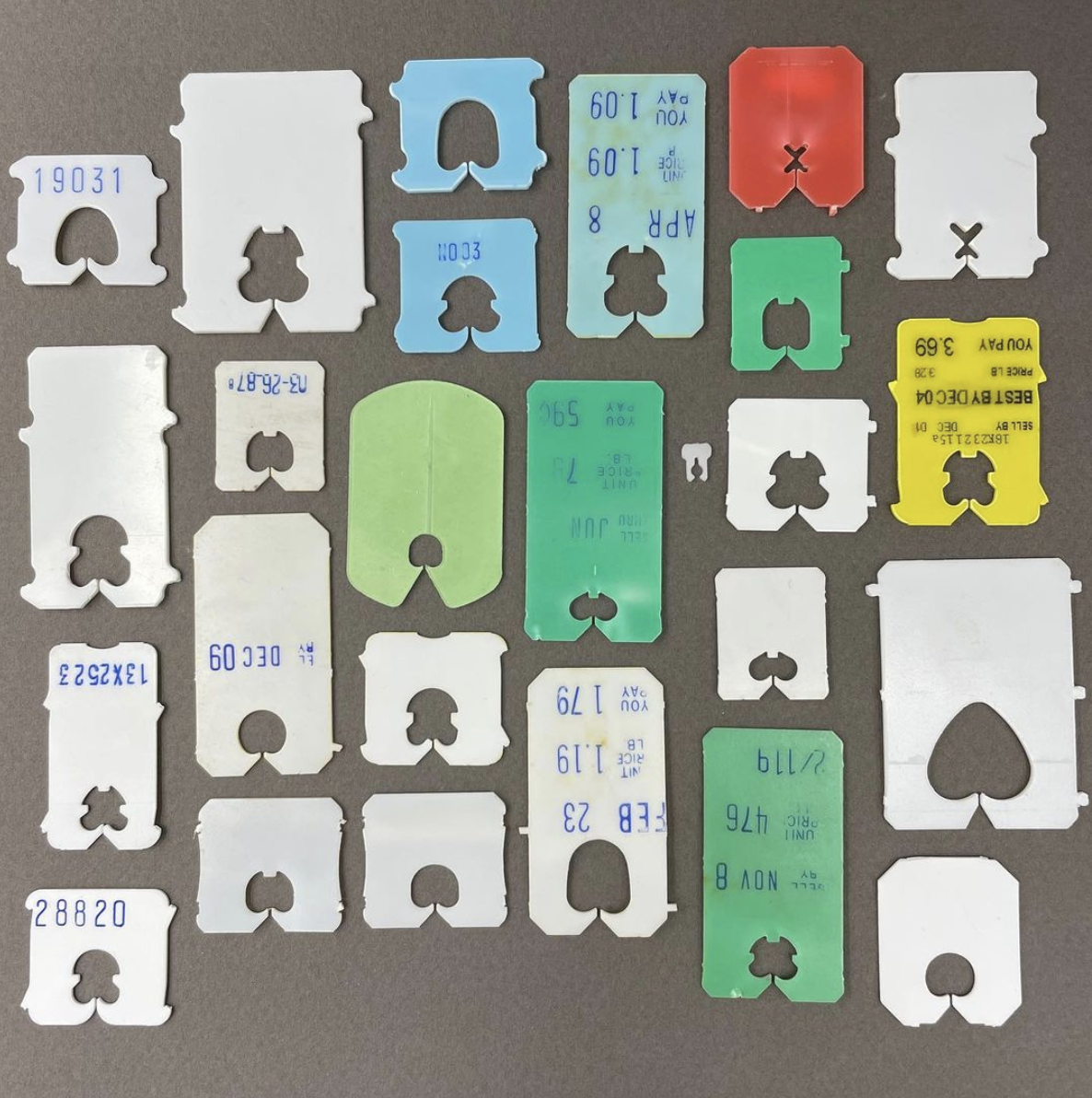
Dozens of relevant gifs at classicfm.
Via MissCellania, where you can always find something humorous (and lots of cat videos and gifs).

When offshoring methodically disemboweled the Rust Belt, white-collar Americans thrived, free to enjoy the spoils of globalization safe in the knowledge that their jobs could not be outsourced easily to cheap foreign rivals. Now, some economists say the remote-work revolution may have changed that almost overnight.“If you can do your job from home, be scared. Be very scared,” Richard Baldwin, an economist at the Graduate Institute in Geneva, said in a recent video. “Because somebody in India … or wherever is willing to do it for much less.”By greatly accelerating the adoption of remote work, the coronavirus pandemic has created a feedback loop that could be the most disruptive force to hit the job market since the blue-collar apocalypse in the 2000s, known among economists as the China shock...The highest-paying industries, software and internet publishing (including search and social networking), also have the highest share of remote workers. A similar pattern holds throughout the income scale, with the lowest-paying jobs — in places such as gas stations — being least likely to be done remotely...And while those jobs are concentrated in urban areas, many of them coastal, no industry or region would be untouched. As Zielinski points out, even blue-collar industries such as construction or manufacturing have plenty of white-collar roles that can be outsourced — think marketing, accounting, finance, sales and IT...Autor, Zandi and other economists say those full-remote jobs could ultimately be a positive for American white-collar workers, liberating them from high-cost urban areas and revitalizing small communities.

A Little Owl imitates a ceramic insulator on a telegraph pole. The bird was spotted by wildlife photographer Mircea Costina in Dobrogea, Romania... Picture: Mircea Costina/Rex Features, via The Telegraph.
4 ft 9 inch tall Brenda Mae Tarpley was born "in the charity ward of Grady Memorial Hospital in Atlanta, Georgia... She attended grade schools wherever her father found work, primarily in the corridor between Atlanta and Augusta. Her family was poor, living hand-to-mouth; she shared a bed with her two siblings in a series of three-room houses without running water... Her father died in 1953, and by the time she turned ten, she was the primary breadwinner of her family through singing at events and on local radio and television shows."
Reposted from 2012 because I found it while looking for other things in the archives, and I enjoyed hearing it again.

"Some things will never change. Some things will always be the same. Lean down your ear upon the earth, and listen.I have not added You Can't Go Home Again to my recommended books category, because the best parts of it are too thinly scattered through a rather prosaic storyline, but the excerpts were certainly worth finding and blogging.
"The voice of forest water in the night, a woman's laughter in the dark, the clean, hard rattle of raked gravel, the cricketing stitch of midday in hot meadows, the delicate web of children's voices in bright air--these things will never change.
"The glitter of sunlight on roughened water, the glory of the stars, the innocence of morning, the smell of the sea in harbours, the feathery blur and smoky buddings of young boughs, and something there that comes and goes and never can be captured, the thorn of spring, the sharp and tongueless cry--these things will always be the same.
"All things belonging to the earth will never change--the leaf, the blade, the flower, the wind that cries and sleeps and wakes again, the trees whose stiff arms clash and tremble in the dark, and the dust of lovers long since buried in the earth--all things proceeding from the earth to seasons, all things that lapse and change and come again upon the earth--these things will always be the same, for they come up from the earth that never changes, they go back into the earth that lasts for ever. Only the earth endures, but it endures for ever.
"The tarantula, the adder, and the asp will also never change. Pain and death will always be the same. But under the pavements trembling like a pulse, under the buildings trembling like a cry, under the waste of time, under the hoof of the beast above the broken bones of cities, there will be something growing like a flower, something bursting from the earth again, for ever deathless, faithful, coming into life again like April."
"Let’s be clear. The most important economic and political issues facing this country are the extraordinary levels of income and wealth inequality, the rapidly growing concentration of ownership, the long-term decline of the American middle class and the evolution of this country into oligarchy.We know how important these issues are because our ruling class works overtime to prevent them from being seriously discussed. They are barely mentioned in the halls of Congress, where most members are dependent on the campaign contributions of the wealthy and their Super Pacs. They are not much discussed in the corporate media, in which a handful of conglomerates determine what we see, hear and discuss...We now have more income and wealth inequality than at any time in the last hundred years. In the year 2022, three multibillionaires own more wealth than the bottom half of American society – 160 million Americans. Today, 45% of all new income goes to the top 1%, and CEOs of large corporations make a record-breaking 350 times what their workers earn.Meanwhile, as the very rich become much richer, working families continue to struggle. Unbelievably, despite huge increases in worker productivity, wages (accounting for real inflation) are lower today than they were almost 50 years ago. When I was a kid growing up, most families were able to be supported by one breadwinner. Now an overwhelming majority of households need two paychecks to survive.Since 1975, there has been a massive redistribution of wealth in America that has gone in exactly the wrong direction. Over the past 47 years, according to the Rand Corporation, $50tn in wealth has been redistributed from the bottom 90% of American society to the top 1%, primarily because a growing percentage of corporate profits has been flowing into the stock portfolios of the wealthy and the powerful.During this terrible pandemic, when thousands of essential workers died doing their jobs, some 700 billionaires in America became nearly $2tn richer. Today, while the working class falls further behind, multibillionaires like Elon Musk, Jeff Bezos and Richard Branson are off taking joyrides on rocket ships to outer space, buying $500m super-yachts and living in mansions with 25 bathrooms...We remain the only major country without paid family and medical leave.In terms of higher education, we should remember that 50 years ago tuition was free or virtually free in major public universities throughout the country...It’s not just income and wealth inequality that is plaguing our nation. It is the maldistribution of economic and political power...Today we have more concentration of ownership than at any time in the modern history of this country. In sector after sector a handful of giant corporations control what is produced and how much we pay for it. Unbelievably, just three Wall Street firms (Blackrock, Vanguard and State Street) control assets of over $20tn and are the major stockholders in 96% of S&P 500 companies. In terms of media, some eight multinational media conglomerates control what we see, hear and read...In terms of political power, the situation is the same. A small number of billionaires and CEOs, through their Super Pacs, dark money and campaign contributions, play a huge role in determining who gets elected and who gets defeated. There are now an increasing number of campaigns in which Super Pacs actually spend more money on campaigns than the candidates, who become the puppets to their big money puppeteers. In the 2022 Democratic primaries, billionaires spent tens of millions trying to defeat progressive candidates who were standing up for working families."

Booth started her jewelry business in 2021, and makes wearable sculptures and trinkets out of people’s bodily fluids and ashes: breastmilk, cremated remains of loved ones or pets, fur and locks of hair. After someone commented on one of her TikTok videos asking if she’d ever considered incorporating “man juices,” Booth made a half-joking Facebook post about “jizzy jewelry,” and started receiving actual, serious orders for it...For a lot of Booth’s customers, it’s a kink thing... “After researching further into the Jizzy Jewelry shop, we both thought it would be the ultimate ‘you are mine’ type ‘collar’... It would be our little secret and inside joke.”[one customer] "ordered a bass fish sculpture with her husband’s father’s ashes, a piece incorporating breast milk, and a thumb ring and bracelet with her husband’s cum..."“We've made these pieces for people going through gender reassignment, fertility treatment and cancer treatment and the finished piece can bring comfort in difficult circumstances. On occasion people may just wish to order one of our pieces as a celebration of their fertility and love to another which is also a beautiful, joyful reason and so it's important to remember that although it's not everyone's cup of tea, there is usually a sentiment behind these pieces that it's not our place to judge.”

The earliest use of the term he could find was around 2011... The word “didn’t have much use in printed, edited prose, however, and maintained a pretty low profile... “It seems like newspapers and magazines discovered the sploot in about 2020.”It might be a variation on “splat”, Stamper wrote, “and that would actually fit its pre-corgi history nicely.” Sploot “has been used in cartoons as one of those onomatopoeic sound descriptions since at least the 1950s; it seemed to be a favorite of the folks behind the Bugs Bunny comic”. It also calls to mind the word “splay”, as a caller to Barrett’s show noted.

Verbascum thapsus, the great mullein, greater mullein or common mullein is a species of mullein native to Europe, northern Africa, and Asia, and introduced in the Americas and Australia.It is a hairy biennial plant that can grow to 2 m tall or more. Its small, yellow flowers are densely grouped on a tall stem, which grows from a large rosette of leaves. It grows in a wide variety of habitats, but prefers well-lit, disturbed soils, where it can appear soon after the ground receives light, from long-lived seeds that persist in the soil seed bank. It is a common weedy plant that spreads by prolifically producing seeds, and has become invasive in temperate world regions. It is a minor problem for most agricultural crops, since it is not a competitive species, being intolerant of shade from other plants and unable to survive tilling. It also hosts many insects, some of which can be harmful to other plants. Although individuals are easy to remove by hand, populations are difficult to eliminate permanently...In the 19th century, it had well over 40 different common names in English alone. Some of the more whimsical ones included "hig candlewick", "Indian rag weed", "bullicks lungwort", "Adams-rod", "hare's-beard", and "ice-leaf". Vernacular names include innumerable references to the plant's hairiness: "woolly mullein", "velvet mullein", or "blanket mullein", "beggar's blanket", "Moses' blanket", "poor man's blanket", "Our Lady's blanket", or "old man's blanket", and "feltwort", and so on ("flannel" is another common generic name). "Mullein" itself derives from the French word for "soft". Some names refer to the plant's size and shape: "shepherd's club(s)" or "staff", "Aaron's rod" (a name it shares with a number of other plants with tall, yellow inflorescences), and a plethora of other "X's staff" and "X's rod". The name "velvet dock" or "mullein dock" is also recorded, where "dock" is a British name applied to any broad-leaved plant...A given flower is open only for a single day, opening before dawn and closing in the afternoon. Flowers are self-fecundating and protogynous (with female parts maturing first), and will self-pollinate if they have not been pollinated by insects during the day. While many insects visit the flowers, only some bees actually accomplish pollination...The seeds maintain their germinative powers for decades, up to 100 years, according to some studies. Because of this, and because the plant is an extremely prolific seed bearer (each plant produces hundreds of capsules, each containing up to 700 seeds, with a total up to 180,000 or 240,000 seeds), it remains in the soil seed bank for extended periods of time, and can sprout from apparently bare ground, or shortly after forest fires long after previous plants have died...Roman soldiers are said to have dipped the plant stalks in grease for use as torches. Other cultures use the leaves as wicks. Native Americans and American colonists lined their shoes with leaves from the plant to keep out the cold... The seeds contain several compounds (saponins, glycosides, coumarin, rotenone) that are toxic to fish, and have been widely used as piscicide for fishing.