Showing posts with label English language. Show all posts

17 August 2026

Screed

 “To the people of the United States of America: you realize that you are being seen by the rest of the world as no better than Russia, no better than China? You’ve threatened Canada, threatened Greenland, invaded Venezuela, and starved Cuba. You’ve caused untold pain around the world. The Strait of Hormuz and the blocking of oil supplies has brought countries to their knees. Now your president is saying that he’s going to make the Strait of Hormuz American territory? Have you people lost touch with reality? While he sits in that chair, the American people are responsible. Go a little further and have a look at the way you are allowing him to treat your sailors: The disrespect he showed the bodies of your servicemen that came back. The way American citizens are being treated on the street. You are allowing it. The people of Iran rose up, and thousands of them were killed. You sit back and watch this man prey on the rest of the world. Disgraceful.”
Not my words, but I agree with them.  Attributed to a "Martin Bella" somewhere on "social media."

I'll add the etymology of "screed" so we can learn something today:
From Middle English screde [and other forms], a variant of shrede (“fragment, scrap; strip of cloth; strip cut off from a larger piece; band or thread woven into fabric; element, streak”) (whence shred (noun)), from Old English sċrēad, sċrēade (“a piece cut off; paring, shred”), from Proto-Germanic *skraudō (“a piece, shred; a cut, crack”), from *skraudaną (“to cut up, shred”), from Proto-Indo-European *(s)ker- (“to cut off”). The English word is cognate with Old Frisian skrēd.  Doublet of escrow, scroll and shred.

Used in this post as "A speech or piece of writing which contains angry and extended criticism. " 

08 August 2026

The woodlouse as a "detritovore"


As an old English major, I've enjoyed accumulating a vocabulary of words ending in "vore."  Most people know carnivore, herbivore, and omnivore; my hobbies and side interests introduced me to granivore, piscivore, insectivore, and frugivore (plus tangentially-related "locavore") (and hypercarnivore).  Yesterday was my first encounter with "detritovore", which I encountered in The Guardian, where they presented the woodlouse as an entry in their annual "Invertebrate of the Year" competition.
Chucky pig. Slater. Monkey pea. Roly-poly. Boat-builder. Butchy boy. Cheeselog. Hobbling Andrew. Wood pig. If there were a prize for the range and joyfulness of a creature’s English-language names, the humble woodlouse would undoubtedly triumph over its million-plus invertebrate rivals.

Over centuries of easy cohabitation with humans, it has acquired more than 300 regional names in Britain alone, and many more in other languages (such as Gwrach y Coed, “witch of the wood”, in Welsh).

There are lovely words for woodlouse actions too: an animal rolling its body into a neat ball is known as conglobation, or volvation in zoology.
You can read more about the woodlouse at the link.  For now I'm just enjoying the new "vore" word [there are lots of others...], and now also "conglobation" and "volvation."

15 July 2026

Apparently some people hate (or love) semicolons

TYWKIWDBI loves semicolons, so I was surprised and intrigued by the content of an article at Literary Hub
"Here is a lesson in creative writing. First rule: Do not use semicolons. . . All they do is show you’ve been to college. "(Kurt Vonnegut)

"I suppose this is a trivial matter but I do want to object to the maddening fuss-fidget punctuation which one of your editors is attempting to impose on my story. I said it before but I’ll say it again, that unless necessary for clarity of meaning I would prefer a minimum of goddamn commas, hyphens, apostrophes, quotation marks and fucking (most obscene of all punctuation marks) semi-colons. I’ve had to waste hours erasing that storm of flyshit on the typescript" (Edward Abbey) [In reference to The Monkey Wrench Gang and preserved in Postcards from Ed: Dispatches and Salvos from an American Iconoclast]

"With educated people, I suppose, punctuation is a matter of rule; with me it is a matter of feeling. But I must say I have a great respect for the semi-colon; it’s a useful little chap." (Abraham Lincoln)

"I don’t have a gun and I don’t have even one wife and my sentences tend to go on and on and on, with all this syntax in them. Ernest Hemingway would have died rather than have syntax. Or semicolons. I use a whole lot of half-assed semicolons; there was one of them just now; that was a semicolon after “semicolons,” and another one after “now.”" (Ursula LeGuin) [from The Wave in the Mind: Talks and Essays on the Writer, the Reader and the Imagination]
See also these previous posts:


15 June 2026

Prefix of the day: "pene"


This rock was identified at the whatsthisrock subreddit as a "penecontemporaneous deformation structure."  It apparently is such a commonly-used term that it is shortened by users to "PCD."  There is excellent informed discussion at the link to explain that PCDs are formed when sedimentary material is deformed during deposition ("contemporaneously").  Lots of further details at Geological Digressions.

I thought the rock was cool, but what grabbed my attention was the fact that I am an English major almost 80 years of age and I'm seeing a prefix that is not in my wheelhouse.

Onward to the Wiktionary entry for "pene":
Almost the thing or quality expressed by the root, as peneplain (almost a plain), peninsula (almost an island), penultimate (almost the last), penumbra (almost in shadow).
Wow.  Three words I've used for essentially all my adult life without appreciating their common prefix.
You learn something every day.

The etymology of "soccer"

 This will be my only post relevant to this year's World Cup.
"... in its early days, football was a very "posh" sport.  "The people who founded the Football Association in England in 1863 were Oxford graduates who had attended elite public schools," he said.  The game played under Football Association rules became known as "association football", wrote John M Cunningham in the Encyclopaedia Britannica.  The name also helped distinguish it from another popular sport: rugby...

Among wealthy university students in the 1880s and 1890s, there was a habit of shortening words and adding "-er" to the end, creating a kind of slang.  "So instead of saying 'breakfast,' they would say 'brekker'."  Applied to rugby, they would call it "rugger."..

It appears that these inventive students took "soc" from the middle of the word "association" and added "-er," producing "soccer".  "Obviously, no-one knows for certain, but what people are sure about is that it comes from Oxford. There are many documentary sources confirming that it was a word coined by students there."
More information at the source article at the BBC.

08 June 2026

Ending a movie with a preposition


Last evening while trying to avoid doomscrolling I browsed some movies recorded on my DVR.  I noticed that the dialogue in The Maltese Falcon ends with a preposition.

I found some commentary on the phrase at Blog of the Darned:
To be fair, the quote is based on a quote from Shakespeare:

Prospero:
   ...
   Leave not a rack behind. We are such stuff
   As dreams are made on; and our little life
   Is rounded with a sleep.
The Tempest Act 4, scene 1, 156–158

Also "The stuff that dreams are made of" did not appear in Dashiell Hammett novel. Humphrey Bogart reportedly suggested the line to John Huston, and they went with it. Bogart was a stage actor on Broadway before turning to film, so I presumably he was familiar with The Tempest.
I'm not a rigid prescriptivist regarding usage of the English language, but last night I wondered whether any other major motion pictures end the dialogue on a preposition.  A quick search of "last lines" mentions "And then I woke up" from No Country for Old Men, but in that case it would be an adverb (it's also not a preposition in "I'm ready for my close up."

There are probably many such examples.  If there are movies with Minnesota characters, they might end a scene asking "are you coming with?"

I offer the challenge to the readers here.  Not just any movie sentences ending with prepositions, but final words spoken in a movie.

07 June 2026

Scribbles on a bookmark - solved with AI


When I read books I use white paper bookmarks so that I can jot down new words to look up. or pithy statements or clever insights worth quoting in TYWKWDBI.  The best bookmarks are cut-up greeting cards, which have white expanses and the proper stiffness.

Embedded above is a scan of the top portion of a bookmark I recently found in a pocket while doing laundry.   And to my dismay I had no idea what book I had been reading at the time, or how long ago.  I can still look up words, but how to retrieve the "advice" from some page 61? (I had already decided to skip the "cure for lesbianism" on page 32).

Does anyone want to try to guess the book, based on the words harvested?  Answer tomorrow.

Addendum:  I could not for the life of me figure out which book I had been reading.  So I asked AI:


I immediately remembered the book, which I had read because it was longlisted for the Booker Prize.  I had returned it to the library many weeks ago.  So I looked at my list of "Books read" and there it was - graded with a "2+" on my personal scale of 0-4.  

That rating meant it wasn't worth a potential future reread and not worth reviewing for TYWKIWDBI, so I won't be recommending the book here.  I may add attercop, inchwell, swingle scutch, becks, and casemate to my huge list of interesting words (sigil is already there).  And I've requested the book from the library again to see whether the "cure for lesbianism" or the "advice" are worth blogging.

I'm posting this now not for the book per se, but to make note of the amazing power of artificial intelligence.  I used the commonly-available and free "AI mode" on Google.  What amazes me is that it appears that 127 pages of this book have been loaded into a database.  So I wondered whether the book could be reproduced by asking the AI to "regurgitate" it passage by passage ("give me a sentence, give me the next sentence etc...).  This morning I asked...


That was followed by links (to New Direcrtions Publishing and to Penguin Books Australia) where I could purchase the book.  Interestingly there was no link to a third-party seller like Amazon, and (to my disappointment and that of John Farrier) no suggestion that "you can get this book from your local public library."

All of this would seem to be within the boundaries of copyright law, but it still amazes me that a book just published this past year has already been scanned into storage into a massive data warehouse that is guzzling cooling water somewhere in a rural agricultural area.

06 June 2026

"Mogging" explained

Mogging’s origins are in the manosphere, where it began as a verb derived from the acronym “Amog” (alpha male of the group). In misogynistic forums in the 2010s, to “mog” came to mean to outdo someone in terms of sexual desirability. Mogging has been adopted by “looksmaxxing” influencers such as Braden Peters, known online as Clavicular, who encourage men to try to alter their looks – sometimes in extreme ways – to increase their “sexual market value”. Such an influencer might talk of “frame mogging” another person in a photo or video – a variation on mogging that specifically refers to being more muscular.

Even now, as the term has begun to be used much more widely, and in a tongue-in-cheek way, it is still typically associated with looks (a friend of mine, for example, was described by her boyfriend’s younger siblings as “mogging him” in a photo). But increasingly, mogging can mean besting others at basically anything. The gold medal Olympic figure skater Alysa Liu said in an interview last year that her main competition strategy was “to mog”, while a 23-year-old colleague of mine tells me that she and her friends joke about “walk-mogging” when they overtake people on the street.
Discussion continues at The Guardian.

03 June 2026

I'm glad the teacher graded this with a smiley


Reposted from 2024 because I needed a laugh tonight.  And it's interesting on a reread to notice how the errors the girl made actually make some sense.

29 May 2026

A cartoon for English majors - updated


This one was "over my head."  I'll post now for other English majors to ponder, and update after the weekend with some relevant details and links.

Addendum: As I was preparing this series of memorial posts about George Booth, one of the library books included some biographical material.  They indicated that Booth did not tend to use "gag writers" to provide the captions accompanying his cartoons, but that when he did encounter a potentially useful phrase, he saved it up until an appropriate cartoon came to mind.  Two examples were cited.

The cartoon above has text based on the play Cymbeline (in Act III, Scene 6 "Wales.  Before the cave of Belarius"), when they spot Imogen (dressed as a boy) in the cave:
BELARIUS
[Looking into the cave]
Stay; come not in.
But that it eats our victuals, I should think
Here were a fairy.
GUIDERIUS
What's the matter, sir?
BELARIUS
By Jupiter, an angel! or, if not,
An earthly paragon! Behold divineness
No elder than a boy! 

Re-enter IMOGEN

IMOGEN
Good masters, harm me not:
Before I enter'd here, I call'd; and thought
To have begg'd or bought what I have took:
good troth,
I have stol'n nought, nor would not, though I had found
Gold strew'd i' the floor. Here's money for my meat...
The scene has been illustrated for various publications of the play, as in this example (a reproduction from the Dallas Museum of Art):


and again here:


and yet again here:


So the scene appears to be well recognized by artists and thespians.  But the phrase "By Jupiter, an angel..." was totally unfamiliar to me (in my defense I would suggest that Cymbeline is one of Shakespeare/deVere's lesser-performed works).  It wasn't until I read the Booth biography and the cartoon at the top was discussed that I was prompted to search Google for the true source of the quotation.

Interestingly, the biography went on to offer one more cartoon based on a quotation from someone.  The caption in this cartoon -


- was credited to "Hank Martin."  I spent a lot of time fruitlessly Googling that name before finally deciding that the reference must be to Henry Martin, who like Booth was a longtime New Yorker cartoonist.

But... to what is the text of the caption referring???  I have been unable to find a primary source for the "lone grape" sentences (searches typically lead to cartoon compilations that include both Booth and Martin).  Perhaps the excitement on the bus was something spoken to Booth by Martin privately, or perhaps it exists in some correspondence or book.  For now it remains a mystery unless some reader of this blog can suss it out.


Resposted from 2022 to accompany a new post about humor for English majors.

05 May 2026

A brilliant turn of phrase

"A beleaguered grunt from the other room interrupts him.  Moments later, a teenage boy lopes out... Without a glance at Cameron, the boy holds up a cereal box and moans, 'Mom!  We're outta Cheerios."...

A look of surprise crosses Avery's face, then she inhales stiffly... "Marco, hon, what do we do when we're out of Cheerios?"

Marco rolls his eyes.  "The list."

"Right.  We add it to the shopping list," she says, her tone pointed  "I'm sure you'll find something else to eat in the meantime."

Marco mutters, "We're out of chips, too."

"Oh, the humanity," Avery says dryly.  "Look I'll try to get to the grocery store later..."
-  excerpted from Remarkably Bright Creatures, by Shelby Van Pelt.

Very seldom do I actually laugh out loud when reading a book, but the mother's phrase of exasperation with her teen's complaint was truly chuckleworthy.  In the past, when confronted with such a situation, my response probably would have been to say (or at least think) "First World Problem."  But this response is better.

29 April 2026

"86" explained


This morning while doomscrolling I saw a headline indicating that the Department of Justice would be indicting former FBI Director James Comey "because he shared a photo of some seashells."  They are alleging that the "86 47" in the photo is indicative of inciting violence against the president.

Any idiot could look up 86 in Wikipedia:

In the hospitality industry, it is used to indicate that an item is no longer available, traditionally from a food or drinks establishment, or referring to a person or people who are not welcome on the premises. Its etymology is unknown, but the term seems to have been coined in the 1920s or 1930s.
There are multiple theories re the etymology, which you can read at the link.  Think of the countless hours expended by highly-paid attorneys on both sides, much of which comes at the expense of the public, and for no practical purpose.  I'm so tired of this shit.

27 April 2026

The tornado in The Wizard of Oz (1939)


The depiction of the tornado in the 1939 film was intense and remarkably well-executed, even by modern standards.  I found a relevant Instagram post (which I don't know how to embed) that describes the basic technology used.  

The tornado isalso discussed at some length in an article at the Oz Museum.  English majors and other wordsmiths will appreciate this aspect:
“Cyclone” is the word L. Frank Baum chose to describe the Kansas storm in his story, although he clearly meant “tornado.” Shortly after THE WIZARD OF OZ book first appeared in 1900, Professor Willis L. Moore, then Chief of the United States Weather Bureau, wrote Baum’s publishers to urge them to correct the inaccurate usage. He received a response from Frank K. Reilly of The George M. Hill Company, offering that the change would be made in the next edition.  This, however, was never done, and any who purchase a copy of THE WIZARD OF OZ reprinting Baum’s original language will find that “cyclone” remains, again and again – as colloquial and as factually incorrect as ever. (MGM got around the issue in the movie by having Bert Lahr exclaim, in idiomatic fright, “It’s a twister! It’s a twister!” Later on, however, the screenwriters were loyal to Baum, and Judy Garland’s Dorothy explains to Toto, “We must be up inside the cyclone!”)
The article goes on to discuss the various static artistic depictions of the tornado in different publications of The Wizard of Oz, including this one -


- in which the tornado is still present in Munchkinland.  The Oz Museum article is nicely illustrated, but for explication of the movie technique, see the Instagram account.

08 April 2026

Zweeeeëg explained


If I'm going to blog words tonight (in order to avoid you-know-what/you-know-who), we might as well look at this wonderful word meaning "dizygotic."  This discussion thread at the etymology subReddit has a lot of interesting and relevant content, including how in Danish one word can mean either dizygotic or double-edged.  Followed by a allusion to the two very different meanings of "unionized" (union-ized vs un-ionized) and the two meanings of logistics (vs. logistic).

Words are always fun.

Word for the day: deranged

It's a word most people recognize and vaguely understand, but I was curious about the etymology.
From French déranger, from Old French desrengier (“throw into disorder”), from des- + rengier (“to put into line”), from reng (“line, row”), from a Germanic source. See rank (noun).
Coming from the French is what left it out of my wheelhouse.  But it makes sense - disrupting a rank, creating disorder.


The Google Ngram viewer for usage in books shows several generations of quietude followed by a rise in recent decades.  I suspect once the 2025-26 data is entered that there will be an upward spike.  If there is an equivalent tool for monitoring usage in blogs and social media, I should think the numbers will have gone parabolic this year.

The synonyms are pretty familiar -


- and the idioms are perhaps more fun to peruse:


Addendum:  An example of deranged behavior, expressed as a Mother's Day greeting FFS -

29 March 2026

Mispronouncing Henry David Thoreau's last name

As reported by The New York Times -
It turns out that the accent does not belong on the second syllable, as in “merlot” or “Poirot.” It rests on the first syllable, like “thorough” — as in, “I am thoroughly confused by this strange turn of events.”

This front-loaded pronunciation has apparently always been there, hiding in plain sight in the halls of academe, even if no one told us about it. “There is a consensus that “THU-ro” is the correct way to pronounce it,” John J. Kucich, co-president of the nonprofit Thoreau Alliance, said in an interview. “But somehow “Thu-RO” — here Kucich uttered the word the common way — “got into the culture, and it’s in the water to pronounce it that way.”..

“People aren’t used to seeing that name; it’s not a New England name, and they pronounced it THU-ro” she said in an interview. So did the man himself, judging from ample contemporary evidence.

For instance, there’s an 1860 journal entry from Thoreau’s neighbor Bronson Alcott, the father of Louisa May Alcott. “Comes Thoreau and sups with us,” Alcott wrote. “He is rightly named Thorough … the pervading Thor, the sturdy sensibility and force in things.”

And in a 1918 letter from Edward Emerson, son of Thoreau’s friend Ralph Waldo Emerson: “We always called my friend Thórow, the h sounded, and accent on the first syllable,” he wrote...

(Both pronunciations are actually technically incorrect, at least from the French perspective, he adds; the proper French pronunciation would be “tu-row,” with the “th” pronounced as a hard T and an accent on neither syllable.)

14 March 2026

A language curiosity


In the etymology subreddit, someone made note of the fact that in various languages, the word for "night" is the same as the word for "eight" with the letter "n" added.  This is true.  He/she offered a theoretical and totally incorrect hypothesis.  

I won't give the correct explanation here.  I'll let readers ponder the curiosity before seeking the correct explanation, which is buried down in the comment thread in the reply by BeansandDoritos.

01 March 2026

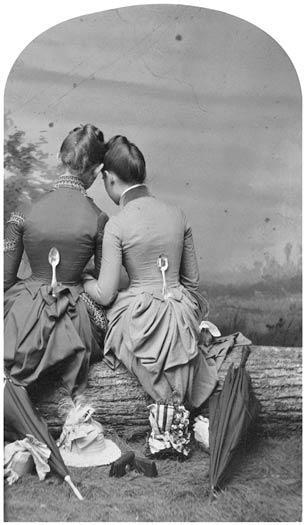
"Spooning" - and "Prufrock" (updated)


The conventional definition involves sentimental love, but the photo source also offers this comment:
The word also had homosexual connotations, as in Stoppard’s The Invention of Love. Says old A. E. Housman to young A. E. Housman: “Centuries later in a play now lost, Aeschylus brought in Eros, which I suppose we may translate as extreme spooniness; showers of kisses, and unblemished thighs. Sophocles, too; he wrote The Loves of Achilles: more spooniness than you’d find in a cutlery drawer, I shouldn’t wonder.”
Found at Modern Foppery, via

Addendum: I originally posted this back in 2010.  This week I encountered the photo again while browsing the web, and decided to search for more information on the unusual imagery.  When I Googled several key words, the #1 hit was...


I have to admit that was a bit startling, especially since it was one of my favorite poems when I was an English major in college (never could quite memorize it all, but I can still call up key passages).  And the connection to the photo? - just the coincidental presence of the keywords I selected ("women," "spoons," "behind," and "back.")

So I'm going to use this serendipitous event as an excuse to post the poem.

LET us go then, you and I,
When the evening is spread out against the sky
Like a patient etherized upon a table;
Let us go, through certain half-deserted streets,
The muttering retreats        5
Of restless nights in one-night cheap hotels
And sawdust restaurants with oyster-shells:
Streets that follow like a tedious argument
Of insidious intent
To lead you to an overwhelming question….        10
Oh, do not ask, “What is it?”
Let us go and make our visit.
In the room the women come and go
Talking of Michelangelo.
The yellow fog that rubs its back upon the window-panes,        15
The yellow smoke that rubs its muzzle on the window-panes
Licked its tongue into the corners of the evening,
Lingered upon the pools that stand in drains,
Let fall upon its back the soot that falls from chimneys,
Slipped by the terrace, made a sudden leap,        20
And seeing that it was a soft October night,
Curled once about the house, and fell asleep.
And indeed there will be time
For the yellow smoke that slides along the street,
Rubbing its back upon the window panes;        25
There will be time, there will be time
To prepare a face to meet the faces that you meet;
There will be time to murder and create,
And time for all the works and days of hands
That lift and drop a question on your plate;        30
Time for you and time for me,
And time yet for a hundred indecisions,
And for a hundred visions and revisions,
Before the taking of a toast and tea.
In the room the women come and go        35
Talking of Michelangelo.
And indeed there will be time
To wonder, “Do I dare?” and, “Do I dare?”
Time to turn back and descend the stair,
With a bald spot in the middle of my hair—        40
(They will say: “How his hair is growing thin!”)
My morning coat, my collar mounting firmly to the chin,
My necktie rich and modest, but asserted by a simple pin—
(They will say: “But how his arms and legs are thin!”)
Do I dare        45
Disturb the universe?
In a minute there is time
For decisions and revisions which a minute will reverse.
For I have known them all already, known them all:
Have known the evenings, mornings, afternoons,        50
I have measured out my life with coffee spoons;
I know the voices dying with a dying fall
Beneath the music from a farther room.
  So how should I presume?
And I have known the eyes already, known them all—        55
The eyes that fix you in a formulated phrase,
And when I am formulated, sprawling on a pin,
When I am pinned and wriggling on the wall,
Then how should I begin
To spit out all the butt-ends of my days and ways?        60
  And how should I presume?
And I have known the arms already, known them all—
Arms that are braceleted and white and bare
(But in the lamplight, downed with light brown hair!)
Is it perfume from a dress        65
That makes me so digress?
Arms that lie along a table, or wrap about a shawl.
  And should I then presume?
  And how should I begin?
.      .      .      .      .      .      .      .
Shall I say, I have gone at dusk through narrow streets        70
And watched the smoke that rises from the pipes
Of lonely men in shirt-sleeves, leaning out of windows?…
I should have been a pair of ragged claws
Scuttling across the floors of silent seas.
.      .      .      .      .      .      .      .
And the afternoon, the evening, sleeps so peacefully!        75
Smoothed by long fingers,
Asleep … tired … or it malingers,
Stretched on the floor, here beside you and me.
Should I, after tea and cakes and ices,
Have the strength to force the moment to its crisis?        80
But though I have wept and fasted, wept and prayed,
Though I have seen my head (grown slightly bald) brought in upon a platter,
I am no prophet—and here’s no great matter;
I have seen the moment of my greatness flicker,
And I have seen the eternal Footman hold my coat, and snicker,        85
And in short, I was afraid.
And would it have been worth it, after all,
After the cups, the marmalade, the tea,
Among the porcelain, among some talk of you and me,
Would it have been worth while,        90
To have bitten off the matter with a smile,
To have squeezed the universe into a ball
To roll it toward some overwhelming question,
To say: “I am Lazarus, come from the dead,
Come back to tell you all, I shall tell you all”—        95
If one, settling a pillow by her head,
  Should say: “That is not what I meant at all;
  That is not it, at all.”
And would it have been worth it, after all,
Would it have been worth while,        100
After the sunsets and the dooryards and the sprinkled streets,
After the novels, after the teacups, after the skirts that trail along the floor—
And this, and so much more?—
It is impossible to say just what I mean!
But as if a magic lantern threw the nerves in patterns on a screen:        105
Would it have been worth while
If one, settling a pillow or throwing off a shawl,
And turning toward the window, should say:
  “That is not it at all,
  That is not what I meant, at all.”
.      .      .      .      .      .      .      .
        110
No! I am not Prince Hamlet, nor was meant to be;
Am an attendant lord, one that will do
To swell a progress, start a scene or two,
Advise the prince; no doubt, an easy tool,
Deferential, glad to be of use,        115
Politic, cautious, and meticulous;
Full of high sentence, but a bit obtuse;
At times, indeed, almost ridiculous—
Almost, at times, the Fool.
I grow old … I grow old …        120
I shall wear the bottoms of my trousers rolled.
Shall I part my hair behind? Do I dare to eat a peach?
I shall wear white flannel trousers, and walk upon the beach.
I have heard the mermaids singing, each to each.
I do not think that they will sing to me.        125
I have seen them riding seaward on the waves
Combing the white hair of the waves blown back
When the wind blows the water white and black.
We have lingered in the chambers of the sea
By sea-girls wreathed with seaweed red and brown        130
Till human voices wake us, and we drown.

Composed by T.S. Eliot (1888–1965), and published in Prufrock and Other Observations (1920).

Addendum:  Here's a very interesting and perhaps relevant observation by reader frenchfarmer:
"Spoon" in french is "cuillère" and is pronounced "quee-er."
Addendum #2:
Reposted once again (August 2015) because this year marks the 100-year anniversary of "Prufrock."
When T.S. Eliot’s “The Love Song of J. Alfred Prufrock” made its first appearance in print 100 years ago, it did not in any way disturb the universe. Having languished in a drawer for four years, the poem was finally first published in the June 1915 issue of the Chicago journal Poetry, placed toward the back because the editor didn’t much like it... The reviews were a mix of indifference, confusion, and disdain. The Times Literary Supplement remarked that Eliot’s “observations” were “of the very smallest importance to anyone—even to himself.”...

Of course, it’s now clear that “Prufrock” is one of the great poems of the twentieth century. It is widely taught in schools, and its strange and subversive incantations are freely released into the unformed souls of adolescents without any regard for the consequences...

The nature of Eliot’s personal hell during his time in Paris was complicated and multifaceted, but the fact that he was still a virgin was undoubtedly part of it. Eliot suffered from a congenital double hernia, which meant he wore a truss from an early age. His cadaverous bookishness and universally remarked-on shyness didn’t help his cause with women at Harvard or anywhere else...
Continued at the link.

Reposted in 2026 because I ran across this old post while looking up stuff about Dante's Inferno, and wanted to make sure I had already blogged Prufrock.  Nothing to add now - just wanted to revisit the poem (and reader Elagie's salient comments).

23 February 2026

The title of Finnegans Wake


Found on Facebook and fact-checked as best I can.  Apparently this is true.  Interesting (not that I'll ever read the book, but interesting nevertheless).  Posted for other English majors and copy editors, who are the only people who will care.


Related Posts Plugin for WordPress, Blogger...