17 March 2020
Bro
Those who don't follow sports can read about Zion Williamson here. The point is that he is a rookie on a professional basketball team and that he is offering to pay the salaries of the employees at the arena where the team plays for the next month (while the season is suspended). Some other players have made similar moves; so far none of the team owners have done so.
Image of his Twitter feed entry via CBS News.
Comparison of increasing infection rates
Probably soft data since the number of "infected" discovered depends on the extent of testing, but the parallels are still interesting. Some informed discussion here. The above table was posted two days ago. This graph is from yesterday.
This is not a normal Tuesday morning
The main front aisle at our local Home Depot, midmorning on a Tuesday. Normally there would be a good number of contractors and suburbanites wheeling carts and dollies down toward the cash registers at the far end. When I was there at 0930 this morning I encountered more staff than customers. Found my kitchen faucet replacement and checked out without touching anything other than the package and the scanning wand.
All the more surreal because we are not under any community lockdown or restrictions other than for large gatherings. And we are in a state with relatively few (known) cases of coronavirus. People in Madison seem to be self-isolating. It's obvious that there will be a lot of businesses hurting in terms of cash flow, and those suffering the most will be small businesses that don't have the financial resources of larger corporations. A reminder to everyone that if you have the wherewithal to be generous, this is the time to deploy those resources. Your barber/hairdresser will appreciate a larger tip, as will anyone in a service industry.
16 March 2020
Interesting Croatian island
Many of Croatia’ coastline is characterized by karst topography—in other word, it’s rocky. To cultivate this rocky terrain, farmers painstakingly picked rocks out of the soil and then used the same to construct walls around geometric plots, creating, in some cases, a grid that stretched for kilometers. In Baljenac, an island just half a kilometer long, the walls stretch for 23 kilometers. Recently, the Croatian government has been pushing the UNESCO to include the island and its dry stone walls in their World Heritage Sites list.More info and other photos at Amusing Planet.
Aside from defining agricultural boundaries, the walls also keep out strong winds known as “bura”, that makes cultivation possible in exposed locations along the coastline.
Huge "loopholes" in the coronavirus relief package
Early Saturday morning the US House of Representatives voted 363-40 to pass a coronavirus relief package, days after the World Health Organization declared the virus a pandemic. The US Senate won’t take the bill up until at least Monday, because Senate Majority Leader Mitch McConnell decided to give Senators the weekend off.More at Common Dreams.
House Speaker Nancy Pelosi is facing widespread criticism Saturday for misrepresenting what the legislation would actually do.
In a letter to her Democratic colleagues Saturday Pelosi wrote:
"I am very proud to write that the provisions we put forth with your input, including paid sick leave, paid family and medical leave, enhanced Unemployment Insurance, food security initiatives and free and widespread testing, are all included in this agreement. "The New York Times editorialized Saturday afternoon:
House Speaker Nancy Pelosi early Saturday celebrated passage of legislation she described as providing paid sick leave to American workers affected by the coronavirus.She neglected to mention the fine print.In fact, the bill guarantees sick leave only to about 20 percent of workers. Big employers like McDonald’s and Amazon are not required to provide any paid sick leave, while companies with fewer than 50 employees can seek hardship exemptions from the Trump administration.“If you are sick, stay home,” Vice President Mike Pence said at a news conference on Saturday afternoon. “You’re not going to miss a paycheck.”But that’s simply not true. Sick workers should stay home, but there is no guarantee in the emergency legislation that most of them will get paid.The White House and congressional Republicans, who insisted on the exemptions as the price of bipartisan support for the legislation, bear the primary responsibility for the indefensible decision to prioritize corporate profits in the midst of a public health emergency...
One upside of the pandemic
"Coronavirus, a Venezia l'acqua nei canali torna limpida: "Meno traffico, meno scarichi""For a dramatic and fascinating comparison of Venice before and during the pandemic, watch this 1-minute gif from the BBC. No discussion of the water, but the difference in crowding is startling.
"...good news comes from Venice, where the water of the canals, usually cloudy, appears limpid and transparent, so much so that fish and the seabed can be seen..."
Addendum: This is also good - rolling live-stream cameras showing virtually empty streets, plazas, and canals. Hat tip to an anonymous reader.
Don't randomly mix cleaning products
I think this graphic is worth sharing. I used to give lectures on toxic gas inhalation; it's surprising how many incidents occur not in industrial settings, but in urban bathrooms or kitchens when a mixture of chemical products are poured into a dirty toilet or plugged sink.
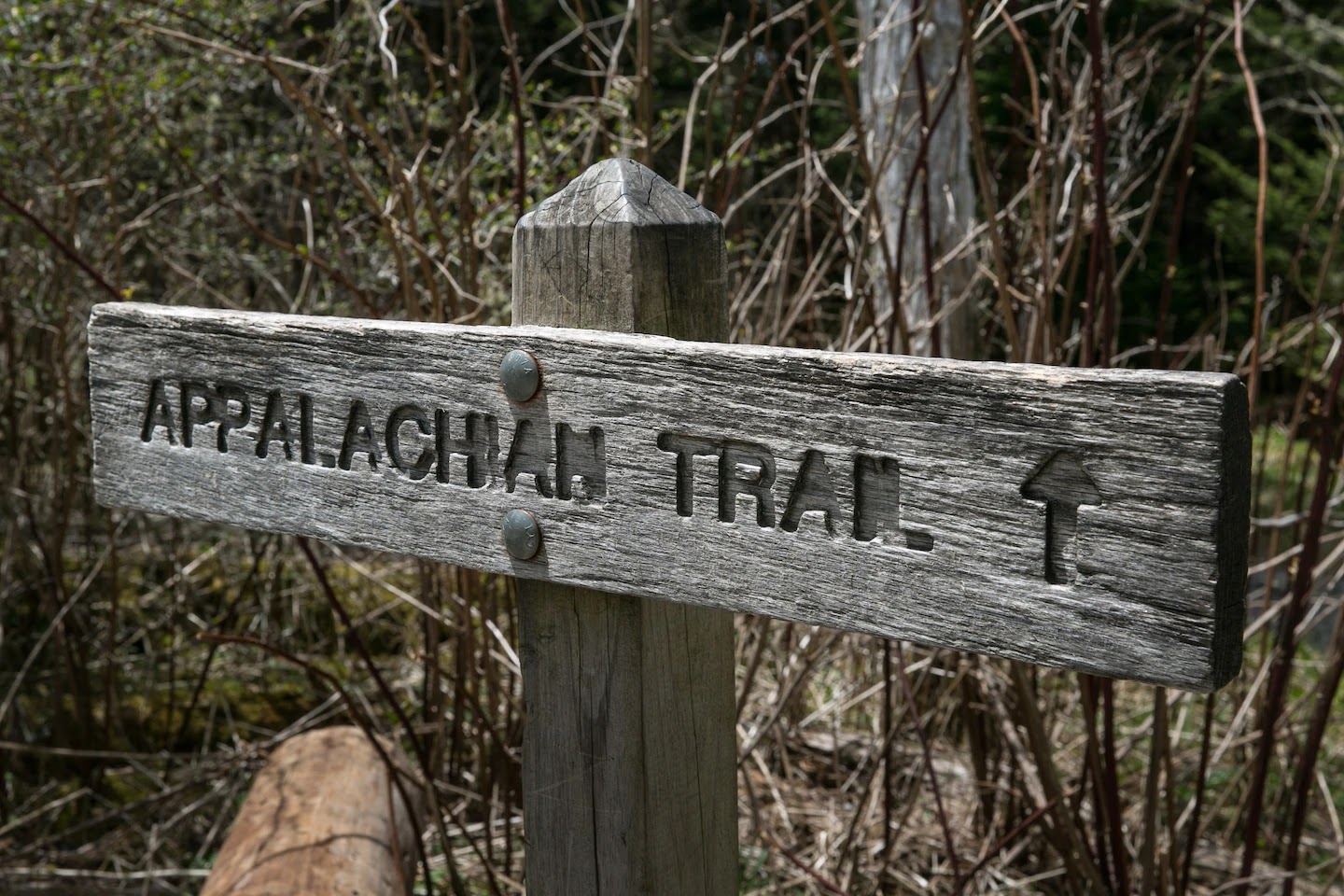
So, is this a good time to go for a long hike?
It's complicated.
To keep their packs relatively light, “thru-hikers” count on being able to periodically leave the trail to stock up on supplies, shower and sleep in a real bed for a change. Those setting off for months-long journeys on the Appalachian Trail, Pacific Crest Trail and Continental Divide Trail now have to consider whether they risk introducing the virus to otherwise isolated rural communities, and whether the freeze-dried food and survival supplies they rely on will be available at a time of widespread panic-buying...More at The Washington Post.
Some thru-hikers argue that while on the trail, they’re less likely to contract the virus and spread it to others. Plus, too many people deciding to stay home could deal a devastating blow to small towns whose economies rely on a regular influx of backpackers. But others worry that hikers could unknowingly bring the virus with them, or pick it up in the process of traveling to the trail...
The PCT passes through California and Washington, two of the states hardest hit by the virus, which makes the stakes even higher. While hikers are used to confronting that they could get sick or injured in the wilderness, many now worry that a bad fall might mean diverting crucial emergency resources, or that there could be a shortage of hospital beds.
A number of hostels catering to Appalachian Trail thru-hikers in Tennessee, North Carolina, Virginia, Maine and New Hampshire have already closed, citing sanitary concerns about shared bunkhouses and bathrooms. Meanwhile, some backpackers fear that there will be a general reluctance to pick up hitchhikers who haven’t bathed in a while, and that backcountry cooking staples like powdered milk, instant mashed potatoes and ramen noodles could be in short supply.
Late last month, Mountain House, an Oregon company whose freeze-dried meals are popular with hikers and doomsday preppers alike, temporarily shut down its website after seeing a 1,093 percent increase in sales compared to February 2019. While the company says that it’s prepared to handle the demand, thru-hikers emerging from the woods in search of hand sanitizer, biodegradable soap and toilet paper may be out of luck...
One French woman spent a year planning her Appalachian Trail hike, quit her job and sublet her apartment, only to find out that her nonrefundable flight from Paris to Charlotte had been canceled...
15 March 2020
Surreal
I'm starting this post on my phone while seated in an airplane. The flight is departing Fort Myers, which is a classic and popular spring break destination, and this is "peak season" here on the Gulf Coast of Florida - but the plane has lots of empty seats. The mood of the passengers in the boarding area seemed muted and somber rather than festive; while I was out there a girl two seats away from me coughed three times in the space of ten minutes. I moved to a different part of the boarding area out of what is now called "an abundance of caution."
Seated on the plane, I note with interest a man across the aisle wiping down his tray table before returning it to its upright position. Then two ladies enter the row ahead of me. They are wearing high quality masks, with the upper edge tightly pinched to their noses and the bottom well under the chin. They pull out two packets of wipes and proceed to scrub not only the tray tables and the armrests, but also the fabric of the seatback and seat cushions, and the full back of the seats ahead of them. One steps into my row to scrub the backs of those seats, apologizing for the smell and explaining that they have children who touch everything. One sits in the row ahead of me, one in the seat next to me.
I am ending a visit to Florida three days early because of uncertainties about how the coronavirus drama will unfold. Last Friday I escaped the dreariness of a late-winter Midwest climate to visit my native-Floridian cousins. A day after arrival in Naples I made a daytrip up to Sanibel to go on a nature hike in the Ding Darling preserve with two old friends from my high-school days.
In an outburst of mutual joy in renewing a friendship after so many years we bumped elbows.
Back in Naples, I monitored the headlines, constrained by the limits of a small phone rather than my heavily bookmarked desktop Mac. CNN gave me thumbnail sketches of the news; the BBC and the Bloomberg business channel provided better insight into the views from Europe and Asia. Events moved quickly; analysts were unable to predict what will happen to the world economy since there is no precedent for a simultaneous supply-side shock and demand shock. The world has shifted into a risk-off mode with 10-year treasuries briefly trading at an incomprehensible 31 basis points.
My cousins received a message from a daughter in Salt Lake City, where the Mormon church has cancelled all services. Worldwide. A hospital there has set up negative-pressure tents on the grounds outside the building to house suspected COVID-19 patients. Medical staff are resigned to the likelihood of becoming infected.
Each day after reading these news items, I stepped outside to find the sky blue and the temperature moderate, and I walked for miles on neighborhood streets and the nearby beach. Everything was quite normal in the natural world.
The human world began to evolve a response that metastasized with a rapidity that the pre-internet world could never have achieved. Museums closed, tourist sites closed their gates. Restaurants were empty. Minor sports events stopped, then major ones. Universities told students to go home, followed by local schools, placing huge burdens on embattled working parents. I decide to terminate my vacation early, uncertain whether travel restrictions might be put into place.
On my final day I’m in a boat in Morgan Bay in the Ten Thousand Island preserve south of Marco. We have arrived at low tide for some birdwatching and beachcombing; we range far apart, as explorers of the natural world often do. Its a reminder that away from urban areas, "social distancing" can be the norm.
I walk on this island, my shoes accelerating the conversion of shells into sand. I find a fascinating lightning whelk egg case but toss it back because I don't need to accumulate any more stuff in my life. Dolphins are cavorting just offshore. Nothing is unusual. It's a day just like most of the previous ten million.
But now nine hours later I'm seated in this plane watching masked people swabbing everything that doesn't move with alcohol. So I look up the definition of "surreal" -
surreal (comparative more surreal, superlative most surreal)An appropriate term. And today is Friday the 13th...
Etymology: From French surréalisme; sur- + realism
- Resembling a dream: fantastic and incongruous
The view from the window on this night flight is as beautiful as always, with spiderwebs of lights interconnected by ribbons of highways. Nothing unusual out there. I walk once up and down the aisle of the airplane. Most of the tray tables are in their "full upright and locked position" - perhaps because this is a discount "red-eye" flight, but it may be a change in behavior. Some passengers are holding tablets and laptops on their knees. Many have their hands folded neatly on their laps, their elbows not touching the armrests. Normal? Maybe. I return to my seat before the flight service begins; while doing so I sense that some passengers are unhappy that I touched the back of their seat while navigating my way down the passageway. The flight attendants move quickly down the aisle with their cart, with many passengers refusing the offer of refreshment. Because it's nighttime, or out of "an abundance of caution"?
I feel like I’m living in a movie adaptation of some Stephen King novel or a 28 Days Later sequel. In my life I've read literally dozens of zombie and postapocalyptic stories (and I've always particularly enjoyed the Last Man On Earth ones), but in none of them did the public response first manifest itself with a hoarding of toilet paper.
I rejoice that I am no longer chief of a pulmonary service and an
intensive care unit attending physician responsible for deciding who gets those
precious beds and who has to be bumped out to a step-down unit on the
ward. And I now appreciate that in those days if my hospital faced a shortage of ventilators, all that needed to be done was to place a call to a vendor or borrow one from a nearby facility. I don’t envy whoever has those triage responsibilities now. And I think of all my favorite trainees - the pulmonary fellows and the
respiratory therapy students - who are likely out there on the front
lines now.
My seatmate asks me if I have ever seen anything like this. I tell her I was an unwilling participant in the big polio epidemic of 1952
and that I escaped with only an ambulatory impairment while other
children in the Sister Kenney institute wound up on iron lungs. But I was a child, way too young to share the more apocalyptic
horror my father must have felt to see his wife and both of his children
afflicted and hospitalized with a disease for which there was no cure and not yet a
vaccine.
Now I'm back at my desk, cleaning up these trip notes. I visited my local Target this morning - not to "stock up" on anything, just for regular grocery needs. The store was not crowded; signs were posted limiting the hoardable items to two per customer. I gathered my cheese and raspberries and naan bread and other staples and returned home. Now I need to attend to paperwork, laundry, house chores, etc and generally recombobulate for a couple days. Then regular blogging will resume.
In the meantime, I invite readers to share their experiences in the Comment section below. No politics please.
05 March 2020
Blogcation
Spring-like weather has arrived in southern Wisconsin; yesterday I spotted the first sprouts of crocus in the part of the front yard where the snow has melted. After a winter during which the steps counter on my phone repeatedly nagged me to start moving or die, it's once again time to go outdoors.
I'm going to take a full two weeks off. This will be a vacation from the blog, from eBay, from scanning memorabilia, from Civilization V, and from essentially everything that requires a keyboard.
I probably won't even take time to curate and approve comments on the posts, so I encourage everyone to take a vacation from TYWKIWDBI. I understand there are some great opportunities available to travel on cruise ships...
04 March 2020
"Roman charity"
Roman Charity (Latin Caritas romana; Italian Carità Romana) is the exemplary story of a woman, Pero, who secretly breastfeeds her father, Cimon, after he is incarcerated and sentenced to death by starvation.The painting depicted at the top is by Pieter van Mol (c 1640), via Wikipedia, where there is a gallery of 16 depictions of Roman charity, including the one by Peter Paul Rubens (1612), below:
The story is recorded in Factorum ac dictorum memorabilium (Nine Books of Memorable Acts and Sayings of the Ancient Romans) by the ancient Roman historian Valerius Maximus, and was presented as a great act of pietas (i.e., filial piety) and Roman honour. A painting in the Temple of Pietas depicted the scene. Among Romans, the theme had mythological echoes in Juno's breastfeeding of the adult Hercules, an Etruscan myth.
The story of Cimon is predated, however, by an almost identical story recorded by Roman historian Valerius Maximus, later retold by Pliny the Elder (AD 23–79), of a jailed plebeian woman who was nursed by her daughter. Historians note that Renaissance and Baroque depictions have more incestuous overtones.
In the seventeenth and eighteenth centuries, many European artists depicted the scene. Peter Paul Rubens is known to have painted several versions. Baroque artist Caravaggio also featured the scene in his work from 1606, The Seven Works of Mercy.
Subscribe to:
Posts (Atom)