31 May 2021

These bridges allow horses towing boats to cross to other side of the canal


The one shown above crosses the Macclesfield Canal in east Cheshire.
A roving bridge, changeline bridge, turnover bridge, or snake bridge is a bridge over a canal constructed to allow a horse towing a boat to cross the canal when the towpath changes sides. This often involved unhitching the tow line, but on some canals they were constructed so that there was no need to do this by placing the two ramps on the same side of the bridge, which turned the horse through 360 degrees. On the Macclesfield Canal this was achieved by building spiral ramps and on the Stratford-upon-Avon Canal and others by constructing roving bridges of iron in two cantilevered halves, leaving a slot in the middle for the tow rope. This was also called a split bridge. For cost reasons many ordinary Stratford bridges were also built in this way as they had no towpath.

The ramps of the bridge are typically studded with alternating rows of protruding bricks to prevent the feet of the horse from sliding. The bridge may be constructed of cast iron (particularly in industrial areas) or of more conventional brick or stone.
Here's another one:


Addendum:  An enjoyable (and relevant) video found by reader Gelvan Tullibole 3rd:


What a pleasant way to spend a summer's day.

Addendum:  Reader nb Amy Jo offers this explanatory video of how a crossover bridge works -


I was pleased to see that "Ian received no harm during the making of this film."

"Portals" appear in Poland and Lithuania


Residents in Lublin and Vilnius can see each other in real time.
The sci-fi-like portals were designed to connect and unify people in different parts of the world amid the months of isolation caused by the pandemic, and the increasing "social polarization" of recent times.

The devices look like circular doors into another world, as imagined in many fictional worlds of fantasy and sci-fi. In fact, the team behind the project said it chose the circle as it is a well-known sci-fi symbol for an interactive "bridge." The minimalist design with LED lighting, meanwhile, was chosen to portray the image of a future city.
Via Interesting Engineering, where there is a promotional video.  A longer report at Bored Panda indicates that other portals are being planned, including at Reykjavik and London.  I think a pair in Florida and Minnesota would help promote travel between the two, as residents take turns winter/summer wishing they were in the other state.

Newspaper article from 1963

Monarchs in the Oyamel fir forests of central Mexico - updated

 
It's always amazing to see the spectacular clusters of Monarchs at their overwintering grounds.  This page at Journey North has lots of related information.  But iNaturalist reports that the severe late-winter storm in Texas did wreak havoc on the first part of the northward migration path:
The 11-day cold spell (10-20 February) in Texas was a disaster. Freezing temperatures covered the state and extended well into Northern Mexico. While many of the immediate effects of the freeze are clear, season long and multiple year effects may linger. The damage to the flora was extraordinary, and it is likely that nearly all above ground insects died over a wide area. Plants already in flower may have been so damaged as to not flower this year. We are seeking help to record that damage and the recovery of plants that flower in March along with the appearance of milkweed shoots and buds. Both are resources used by monarchs returning from Mexico in mid-March. We also need help recording the number of returning monarchs. ALL monarch observations are of value. How well the monarch population will develop in 2021 will be determined by the March conditions in Texas.
The link provides information on how citizen scientists can contribute data.

This updating map shows where Monarchs have been sighted so far this year. 

Addendum:  Reposted from March of this year to add this discouraging news about the deterioration of one of the Mexican monarch reserve sites:
"... you and I will never again see La Lagunita as the Bruggers saw it. More consequentially, neither will the monarchs, because during these past 15 months of pandemic-induced deprivation and desperation, La Lagunita has been trashed. Last year, someone — likely impoverished young men from a nearby community — illegally cut down several dozen oyamel firs, hauling them away for lumber. In December, the arriving monarchs tried to form a colony at La Lagunita but failed, according to Ellen Sharp, who runs a monarch-centric hotel at the foot of the mountain.

A few weeks later, the monarchs gave up and abandoned La Lagunita altogether, shifting to a different location on the mountain. These migrants had become refugees.

Sharp and her husband, Joel Moreno Rojas, have gone to great lengths to try to protect Cerro Pelón from loggers, even forming a nonprofit organization that has hired local “forest guardians” to patrol the mountain and report what they see to the Mexican authorities. But their reports are usually ignored, Sharp says.

Last month, the guardians found another six trees felled at La Lagunita. Eight more were cut down a few days later. These latest wounds make it even less likely that La Lagunita will ever again successfully host roosting monarchs...

The motivation behind these destructive incursions is sadly obvious. The pandemic has had a devastating effect on the struggling, tourist-dependent communities bordering the 52-square-mile core zone of the Monarch Butterfly Biosphere Reserve, where logging is nominally banned but is now on the rise, reversing years of progress. Reserve officials recently acknowledged that 33 acres in the core zone had been illegally logged last year, up from just one acre the year before. The toll this year will surely be worse.

Violence is on the upswing, too, including the unsolved killings of two men who worked at the most heavily visited monarch colony, El Rosario. Now that the pandemic has driven away international tourists, gangs are filling the vacuum..."
More at the link, none of it encouraging.

Vehicular anti-theft device - updated


Reader Kolo Jezdec took note of the discord in the comment thread and has created this modified version of the meme:


And I've amended the title.  Everyone happy?

28 May 2021

Making Chinese rice paper using traditional methods

"Xuan paper or Shuen paper or rice paper, is a kind of paper originating in ancient China used for writing and painting. Xuan paper is renowned for being soft and fine textured, suitable for conveying the artistic expression of both Chinese calligraphy and painting. Xuan paper features great tensile strength, smooth surface, pure and clean texture and clean stroke, great resistance to crease, corrosion, moth and mold. The majority of ancient Chinese books and paintings by famous painters that survived until today are well preserved on Xuan paper. The way of make Xuan Paper are extremely complex and requires highly skilled a worker who able to doing this need practice for several years."

Climate change + pollution = "sea snot"

As the Guardian and numerous Turkish news outlets have reported, high levels of nitrogen and phosphorus in the Sea of Marmara, situated between the Black and Aegean Seas, are leading to an explosion of the phytoplankton populations that discharge “sea snot.” Though the mucus itself is not necessarily harmful, it can become a host to toxic microorganisms and dangerous bacteria such as E. coli. And when it forms a layer that covers the water’s surface, it can set off a harmful chain of events, preventing fish from being able to breathe, causing mass die-offs, which in turn leads to plummeting oxygen levels that choke other forms of marine life...

Since phytoplankton thrive in warmer waters, scientists suspect that climate change may be a factor... Experts have also pointed out that untreated waste and agricultural runoff pour directly into the Sea of Marmara...

Ismet Cigit, a columnist for the newspaper Ses Kocaeli, lamented that humans had “betrayed this world’s most beautiful sea” by allowing chemical storage facilities, fuel tanks, factories and other industrial sites to be built along the coast.

In Izmit, workers have laboriously collected more than 110 tons of the mucus, which was sent to an incinerator for disposal.

“Clearly, there are no deterrent penalties for those who pollute the sea,” he wrote in Turkish, adding, “Marmara is dying.”

Fishing from a chair ladder

The lure of truly big trout — and the thrill of encountering a fish that was once thought to be extinct — had me and a friend strapping house ladders to our car roof for the 11-hour ride from Portland, Ore., to Pyramid Lake [Nevada] in early April.

Our ladders seemed pedestrian next to the local models — custom contraptions made by a Reno craftsman which included a platform and a padded seat.

“When people first started fishing the lake, they used milk crates,” recalled Joe Contaldi, principal guide with Pyramid Lake Anglers. “This helped them cast far enough to reach the drop-offs where the fish cruise looking for food. And it also helped them get above the cold water.” The crates gave way to conventional ladders and then to chair ladders.
The story continues at The New York Times.

Making ice in a red-hot crucible

This week I finished a final goodbye read of the collected tales of Edgar Allan Poe, and encountered this interesting passage:
Place a platina crucible over a spirit lamp, and keep it a red heat; pour in some sulphuric acid, which, though the most volatile of bodies at a common temperature, will be found to become completely fixed in a hot crucible, and not a drop evaporates- being surrounded by an atmosphere of its own, it does not, in fact, touch the sides. A few drops of water are now introduced, when the acid, immediately coming in contact with the heated sides of the crucible, flies off in sulphurous acid vapor, and so rapid is its progress, that the caloric of the water passes off with it, which falls a lump of ice to the bottom; by taking advantage of the moment before it is allowed to remelt, it may be turned out a lump of ice from a red-hot vessel.
I was going to ask readers here about the thermodynamics, but a quick search of the internet today led me to a page at Physics Stack Exchange that discussed this very same passage.  The site provices additional citations of similar experiments in the nineteenth century:
M. Boutigny, by means of sulphurous acid, first froze water in a red-hot crucible; and Mr. Faraday subsequently froze mercury, by means of solid carbonic acid...
A reader there provided some clarification re the reagents -
What they were calling "sulphurous acid" back then is not what we would call an acid today. It was anhydrous sulphur dioxide which has a boiling point of −10∘C.

When liquid sulphur dioxide was poured into the red-hot vessel, due to the Leidenfrost effect, it would form itself up into globules and float on a layer of its own vapour. In this state the temperature of the globules would be just below that of its boiling of −10∘C as it evaporates away at a now greatly reduced rate. Pouring in a small amount of water, which freezes at 0∘C, while the sulphur dioxide is in this state results in it freezing within a few seconds. Once all the sulphur dioxide has evaporated off, the ice will quickly melt again before being brought up to just below its boiling point of 100∘C as it assumes its spheroidal form due to the Leidenfrost effect. If one is quick, before all the liquid sulphur dioxide has disappeared one can throw out a small lump of ice from a red-hot crucible!
Sounds like a demonstration that would make an alchemist proud.

25 May 2021

"The End"

In 2020, the world stood still… in the movies too. “The End” is an experimental narrative short film, in black & white and color, made only with movie gifs with a perfect loop, more than 500. “The End” is also a tribute to the cinema, from silent films to now.

Via Laughing Squid.  I have not found a listing of the embedded movie sources. 

"Doctor, my eyes..."


"A Different Lens" is a short film presented at the Society of Camera Operator's Lifetime Achievement Awards on February 19th, 2012 to benefit the Vision Center at Children's Hospital Los Angeles. Edited by Bob Joyce.  Lots of familiar images, but I haven't located a compilation of the source films.

"Global cactus traffickers"


It seems that anything and everything that is rare and endangered on this planet becomes even more so as the result of human greed.
As with the market for tiger bones, ivory, pangolin scales and rhino horn, a flourishing illegal global trade exists for plants. “Just about every plant you can probably think of is trafficked in some way,” said Eric Jumper, a special agent with the Fish and Wildlife Service. Cactuses and other succulents are among the most sought after, along with orchids and, increasingly, carnivorous species.

Trafficking can take a serious toll. Over 30 percent of the world’s nearly 1,500 cactus species are threatened with extinction. Unscrupulous collection is the primary driver of that decline, affecting almost half of imperiled species. Yet this realm of illegal trade is typically overlooked, a prime example of “plant blindness,” or the human tendency to broadly ignore this important branch on the tree of life...


Many cactus species are highly localized, found, for example, only on certain steep limestone cliffs in Mexico, or a single sandy patch of less than one square mile on Peru’s coast. They also tend to be extremely slow-growing. Larger specimens, which are more highly sought after, can be decades or even hundreds of years old. These features make cactuses particularly sensitive to over-harvesting, but also particularly attractive to collectors interested in exclusivity...

Once cactuses are poached from the wild, illicit trade often happens in the open. High-end plant shops in Japan display protected, wild-harvested species, while sellers around the world advertise them on eBay, Instagram, Etsy and Facebook. Online ads are often accompanied by disclaimers that the cactuses do not come with necessary permits for legal trade, and poachers sometimes livestream videos from the field, asking customers which plants they want...

The computer used by the Inca

"The Incas used a computer.  We do not know how it worked or how the calculations were made, nor do we know what they were calculating.  The device was a box with twenty compartments placed in four rows of five.  Stones were placed in the various compartments, some black, some white.  A compartment was filled when five stones were in it.  Padre Jose de Acosta watched the Incas manipulate this abacuslike device and drew a sketch.  But that was back in 1590.  He was unable to follow the computing procedure.  None of these 20-core memory banks have been found by archaeologists.  Were they destroyed as worthless, pagan magic?"
Text and image from Beyond Stonehenge, by Gerald S. Hawkins (Dorset Press, 1973).  The other relevant item in the image is a quipu, explained here.

Two other things I learned from the book.  There is an Arctic Circle for the moon (equivalent to the solar Arctic Circle we are all familiar with).

Also: "Astronomers recognize A.D. 0 but historians do not.  They count B.C. 2, B.C. 1, A.D. 1..."

Thought for the day

"When you die, people cry and beg for you to come back.  But, when you do, there's all that running around and screaming..."
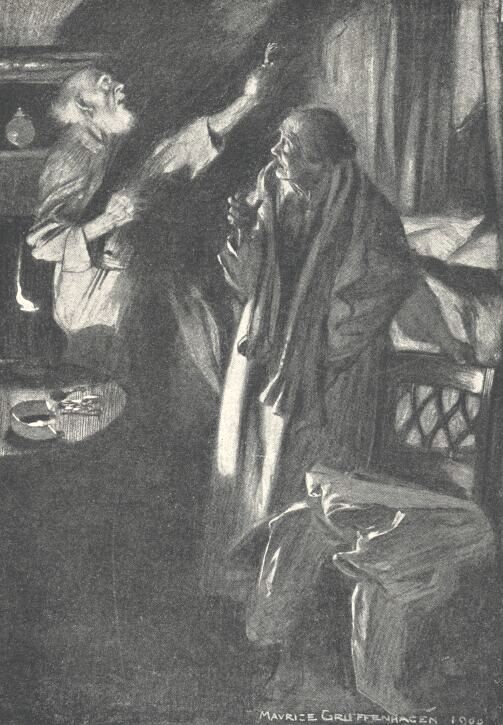
Wry humor, but it reminded me of one of the great short stories of all time.

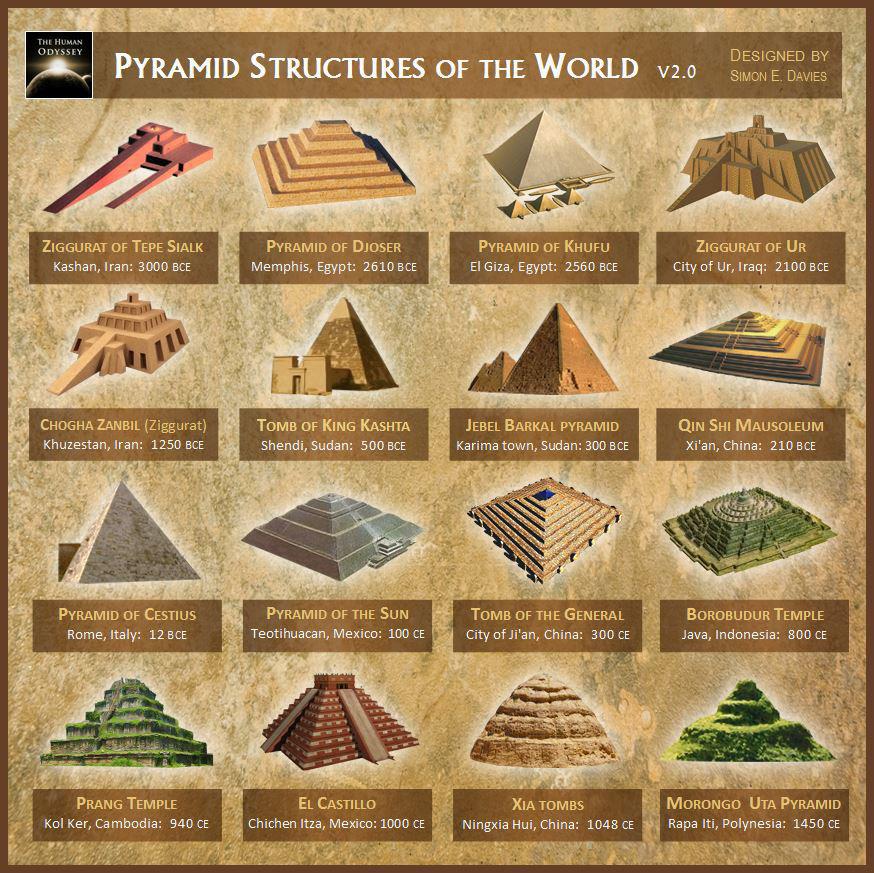
Pyramids around the world

Related Posts Plugin for WordPress, Blogger...