13 December 2018

Seismic change in college curricula

As an English major, I found this story in The Atlantic a bit unnerving:
...in 2015, when Governor Scott Walker released his administration’s budget proposal, which included a change to the university’s mission. The Wisconsin Idea would be tweaked. The “search for truth” would be cut in favor of a charge to “meet the state’s workforce needs.”

To those outside Wisconsin, the proposed change might have seemed small. After all, what’s so bad about an educational system that propels people into a high-tech economy?...

And one of the state’s institutions, the University of Wisconsin at Stevens Point, is the epicenter of that change. In mid-November, the university announced its plans to stop offering six liberal-arts majors, including geography, geology, French, German, two- and three-dimensional art, and history. The plan stunned observers, many of whom argued that at a time when Nazism is resurgent, society needs for people to know history, even if the economy might not. But the university said it just was not possible: After decades of budget cuts, the most extreme of which came under Walker, Stevens Point no longer had the resources to sustain these six majors...

The proposal planned to add majors in chemical engineering, computer-information systems, conservation-law enforcement, finance, fire science, graphic design, management, and marketing. By focusing more on fields that led directly to careers, the school could better provide what businesses wanted—and students, in theory, would have an easier time finding jobs and career success...

By the time the final proposal was released in mid-November 2018, it was less expansive, though still forceful. Six programs would be cut, including the history major...

One thing is sure, however: Financial realities such as those facing Stevens Point are not far off for many regional institutions. “The reality is that we just can’t be everything to everyone, regardless of the public-good value of some of the coursework,” Summers said. “Those constraints are very real.” There are few encouraging signs—if any—that states will once again pump dollars into state colleges to get them back to 2008 levels...

... our role here in central Wisconsin is to anticipate what jobs are going to be needed and to develop programs accordingly." The problem, he fears, is that that alone will never be enough.
The national conversation around higher education is shifting, raising doubts about whether the liberal arts—as we have come to know them—are built to survive a tech-hungry economy.
More in the longread at the link.

12 December 2018

Zoomorphic weight

"Zoomorphic weights were widespread in the ancient world. Weights in the shape of frogs and toads were rare in the Near East, but they do occur in Egypt. This frog weight is dated to the second millennium B.C. on the basis of the four line Akkadian inscription under its throat: "a frog [weighing] 10 minas, a legitimate weight of the god Shamash, belonging to Iddin-Nergal, son of Arkat-ili-damqa." The mina was the Mesopotamian unit of measure, weighing about 500 grams (18 ounces)."
Carved from diorite or andesite in Mesopotamia ca 2000-1600 B.C. From the collections of the Metropolitan Museum of Art, via Uncertain Times.

09 December 2018

Occupational hazard


Not me.  Unfortunately, just the opposite.  I seem to have acquired a "trigger thumb" - a form of repetitive stress injury which I can't attribute to anything other than excessive use of the mouse (though I'm puzzled why the thumb is the affected digit).

I've already given up Civilization V after finally achieving a King-level domination victory in a standard-size world.  But even without the Civ V my thumb tendon is snapping and I need to give it some nonsteroidals and more importantly some rest.  So, it's time for a blogcation...


While I'm away I'll set up the blog to repost some of my favorite material from 4-5 years ago.

Divertimento #158


An article at The Hill notes that "North Korea's nuclear threat is nothing compared to its cyber warfare capabiities."  "Cyber warfare levels the global playing field in a way nuclear weapons can’t for North Korea. The risk-return calculation for hacking versus nukes is exponentially different."

"A new study, published in the British Medical Journal, says there's "strong evidence" that the longer we spend in education the more likely we are to need glasses."

Photo dramatically illustrates the importance of a firedoor.

"Why All Baking Instructions Want Us To Heat Ovens To 350°F"

"The Chief Executive of children’s charity Barnardo's has claimed that as many as 15,000 children could have been illegally adopted in Ireland."

Video of a perpetual motion machine.  

The Apollo 13 astronauts never said “Houston we have a problem.” 

Just for fun, explore the subReddit "What is this thing?"

"...in many cases, the medicines your doctor prescribes are cheaper than the co-pay your health insurance charges, which means that if you just buy the meds instead of charging them to insurance, you save money. "  

"An Indonesian woman has been found in the belly of a giant [23-foot] python after the swollen snake was captured near where she vanished while tending her vegetable garden, police said on Saturday." 

If a service dog without a person approaches you, it means the person is down and in need of help.

Medieval monasteries branded their books (pix at the link).

In the game of petanque, "to fanny" is to shut out the opponent.  "When a player loses 13 to 0, he is said to fanny ("il est fanny", he's fanny, or "il a fait fanny", he made fanny) and must kiss the bottom of a girl named Fanny. Virtually everywhere in Provence where pétanque is played, you will find a picture, woodcarving, or pottery figure of a bare-bottomed lass named Fanny."


"Gaslighting" in the modern era: "People who help domestic abuse survivors say that they are facing an epidemic of women whose abusers are torturing them by breaking into their home smart devices, gaslighting them by changing their thermostat settings, locking them out of their homes, spying on them through their cameras." 

"Fierce yet adorable, Humboldt martens have been described as the west coast’s own Tasmanian devils.... But there are some dangers that the marten cannot withstand – such as marijuana cultivation."

"Using data collected by NASA’s late-great Cassini space probe, scientists have detected traces of complex organic molecules seeping out from Enceladus’ ice-covered ocean. It’s yet another sign that this intriguing Saturnian moon has what it takes to sustain life."

"When you stay in a hotel room and there is a Bible, open the Bible and flip through the pages, sometimes Christians leave cash for each other as a 'pay-it-forward', but you get free money whatever your beliefs."

How to save a wet book.

Romansh is one of Switzerland’s four national languages.

The outcome of the "marshmellow test" is probably strongly influenced by the household income of the child being tested.

"Most of our mainstream political discourse on “fighting inequality” has revolved – for years now – around the more narrow goal of eliminating extreme poverty. Few of our elected leaders ever dare suggest that maybe we ought to think about eliminating extreme wealth as well."

Irony of a pair of signs next to a self-checkout machine.

Water-rich minerals exist between 410 and 660 kilometers below the surface of the earth, in a region called the transition zone, sandwiched between the upper and lower mantles.  " If we consider all of the planet’s surface water as one ocean, and there turn out to be even a few oceans underground, it would change how scientists think of Earth’s interior. But it also raises another question: Where could it have all come from?"


"An Oregon woman who disappeared a week ago has been rescued after surviving at the bottom of a Californian coastal cliff by drinking water using the hose from the radiator of her car which had veered off the road."

"More Movies Should Show Teen Acne."

Video of every Minnesota Vikings touchdown in the 2017-2018 season (15-minute video).

"...the oldest direct evidence of bread found to date, predating the advent of agriculture by at least 4,000 years."

"When a young Birmingham college student's car broke down the night before he was supposed to start a new job, he didn't panic. At least not for long.  Instead, Walter Carr walked. From Homewood to Pelham. All night. In the dark. 20 miles or more."  His employer rewarded him by giving him a car.

3-minute video of a company in China that makes talking sex dolls.   A lot of Westworld vibes here.

"Within the space of a week, two women were impaled by giant umbrellas while enjoying a trip to the beach."

"The largest surviving chained library in the world is at Hereford Cathedral in the UK, where all the books are still kept under lock and key in their original chains. It has been rebuilt in its original arrangement, exactly as it had been from 1611 to 1841." (video at the link)

Take a look at this:  the global seismic network shows worldwide earthquake tremors in real time (toggle for day/week/month). The area around Anchorage Alaska is lit up like a Christmas tree.

A 6-minute study of the "visual footprint" of Darth Vader in the three original Star Wars movies.  Some interesting info.

"Suicides may be greatly underreported in skydivers."  A report in a forensic science journal.

A man and his mother both became infected with rat lungworms after eating raw centipedes.

Embedded images from this book:

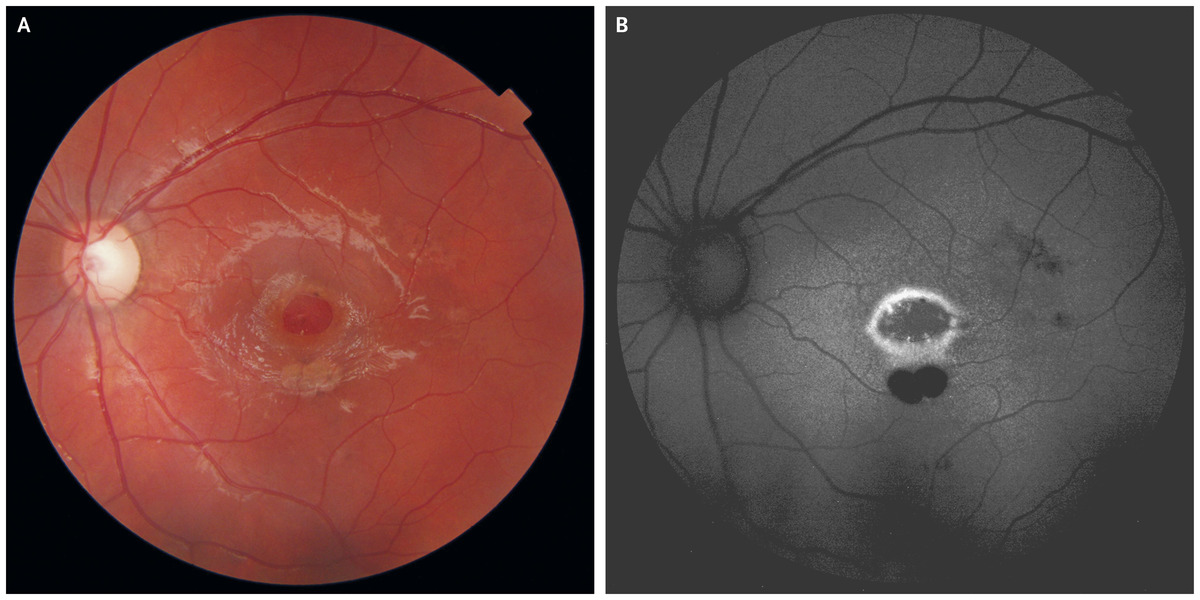
This is why you don't shine a laser in someone's eye

"A 9-year-old boy was brought by his parents to our ophthalmology clinic for evaluation of decreased vision in his left eye. Visual acuity in the left eye was 20/100, as compared with 20/20 in the right eye. Funduscopic examination of the left eye revealed a large macular hole with a hypopigmented atrophic area inferiorly (Panel A). Optical coherence tomography confirmed the full-thickness macular hole.

The child reported playing with a green laser pointer and repeatedly gazing into the laser beam... The patient’s vision has remained unchanged during 18 months of follow-up."
It would be hard to find a more devastating place for the injury than the center of the macula (maybe the optic nerve might be worse).   The article doesn't say how long the exposure lasted, or what the power of the laser was.

A bike lock that's "better than nothing"


Buddy Benches and Men's Sheds


Explained at the BBC:
The idea is simple - if a child feels lonely, they can go to the bench as a signal that they need someone to play with. Another child will see them, go and talk to them and include them in their games...

Also known as friendship benches, these pieces of playground furniture have been around for a while, in various countries...

Apart from reducing social isolation and improving mental wellbeing, the hope is that the benches can tackle another problem found, to some degree, in most schools: bullying...

"They don't see it as stigmatised," says Sinead McGilloway, director of the Centre for Mental Health and Community Research at Maynooth University, who led a study of 117 pupils at three schools which have benches. Forty per cent of the children she questioned said they had used the bench, and 90% said if they saw someone else sitting on it they would talk to them...

In a symbolic gesture, the Buddy Bench Ireland team has its benches made by members of the Men's Shed movement.

There are more than 400 Men's Sheds in Ireland. They are a kind of hobby club where men, usually middle-aged or older, come together to make things. It's proved a lifeline for many coping with issues such as divorce and bereavement, by helping them to open up and talk about what they are going through.

Elevator door (Chrysler Building, New York City)


Via Age of Diesel (tons of cool photos there).

Two commentaries on the American health care system

First, from Common Dreams, the argument that a single-payer system is possible and affordable:
Contrary to the doom and gloom of the latest healthcare spending numbers for the US—$3.5 Trillion overall annually, $10,739 per person, now exceeding 18% of GDP while providing worse outcomes, lower quality and shorter life expectancy than any other industrialized country—the Pollin study shows we can guarantee healthcare to all US residents by improving Medicare, and expanding it to everybody...

The study answers the proverbial question—“But how do we pay for it?”—by utilizing the existing public sources that account for 60% of current financing, eliminating commercial insurance premiums, co-pays and deductibles, and replacing those with a combination of payroll taxes substantially less than employers are paying now, an upper income tax that makes the wealthy pay their fair share, and a sales tax on non-necessities...

It’s important to note that these savings are not available under a multi-payer system, under a system of Medicare buy-in, or via proposals that keep tens of millions of workers in commercial insurance plans.  In such schemes, the administration costs for providers do not substantially decrease; 20% of the tax subsidies to buy insurance are wasted on overhead, marketing and profits; the leverage to set rates is not as strong; and individual purchase (“buy-in”) undermines the social insurance model that spreads costs...
More at the link.  But way more entertaining is a rant at McSweeney's:
"Welcome to America General Hospital! Seems you have an oozing head injury there. Let’s check your insurance. Okay, quick “heads up” — ha! — that your plan may not cover everything today. What’s that? You want a reasonable price quote, upfront, for our services? Sorry, let me explain a hospital to you: we give you medical care, then we charge whatever the hell we want for it.
If you don’t like that, go fuck yourself and die..."
I"ll put the rest below the fold because the language gets a bit "salty" -

The insignificance of signatures - except...


Very interesting.  The accuracy and reproducibility of signatures is unimportant - except when it comes to absentee ballots.

07 December 2018

Awesome bronchial cast


Excerpts from the report in the New England Journal of Medicine:
A 36-year-old man was admitted to the intensive care unit with an acute exacerbation of chronic heart failure... An Impella ventricular assist device was placed for management of acute heart failure, and a continuous heparin infusion was initiated for systemic anticoagulation. During the next week, the patient had episodes of small-volume hemoptysis, increasing respiratory distress, and increasing use of supplemental oxygen... During an extreme bout of coughing, the patient spontaneously expectorated an intact cast of the right bronchial tree.
This report is incorrectly cited elsewhere as a patient "coughing up part of his lung."   This is, as described, a "cast," just as one might make a cast by pouring liquid aluminum into an anthill or a termite mound.  What's amazing is the completeness of the cast, which begins proximally at the carina and extends outward to include (and occlude) the entire right upper lobe (blue arrows), middle lobe (white) and the RLL (black) out to the subsegmental level and beyond.

To me what is interesting is that the cast must have been expectorated shortly after it formed, because with prolonged complete occlusion he would have developed atelectasis of the distal lung and then would not have been able to generate the compressive force to cough it out.

The Atlantic has an informed discussion of the case.

Wolfpack territories


Data from the Voyageurs Wolf Project:
Here is some evidence for how territorial wolves are. This map is the result of 68,000 GPS-locations from 7 wolves in different packs from this past summer. Each wolf's collar took locations every 20 min (with the exception of the northernmost pack which took locations every 4 hr starting in October) for the duration of the summer...

This detailed GPS-data is incredibly valuable for understanding pack boundaries and also for our predation research. We visited every spot these wolves spent more than 20 minutes to determine if the wolves made a kill.

06 December 2018

The Via Francigena


An article in BBC Travel called my attention to the Via Francigena, which I had not previously read about.
I was walking through a centuries-old village in northern Tuscany with not another human in sight. To my right, a few horses grazed in a large paddock. To my left, beyond an old stone house that looked as though it had stood for hundreds of years, a thick copse expanded into a forest of oak, chestnut, holly and ash trees. There was no sound except the buzzing of insects and the drumbeat of my feet hitting the path – a path that, I realised, had become harder underfoot. I stopped and bent down, my pack weighing heavily on my back. Peering through the dirt and moss, I could see bits of stone, like hundreds of disjointed puzzle pieces leading me ahead. I had stumbled upon an ancient Roman road.

I was on day two of walking the Via Francigena, a 1,000-year-old pilgrimage route that extends around 2,000km from the English city of Canterbury all the way to Rome. Its name is a nod to the fact that it travels through France, but during its history the route was also known as the Via Romea for the city where it ends...

The Via Francigena became, for the most part, forgotten, although sections remained in use as local roads and footpaths... In 1994, the Via Francigena became one of the Council of Europe’s designated Cultural Routes.
The Wikipedia entry has much more information about the route.

Greenhouse gas emissions likened to a "speeding freight train"

Greenhouse gas emissions worldwide are growing at an accelerating pace this year, researchers said Wednesday, putting the world on track to face some of the most severe consequences of global warming sooner than expected.

Scientists described the quickening rate of carbon dioxide emissions in stark terms, comparing it to a “speeding freight train” and laying part of the blame on an unexpected surge in the appetite for oil as people around the world not only buy more cars but also drive them farther than in the past — more than offsetting any gains from the spread of electric vehicles...
“We thought oil use had peaked in the U.S. and Europe 15 years ago,” Dr. Jackson said. “The cheap gasoline prices, bigger cars and people driving more miles are boosting oil use at rates that none of us expected.” 
Text and image from the New York Times, where there is more information.

Bonsai


This one recently sold for ¥1,800,000 (about $15,000 USD).
Related Posts Plugin for WordPress, Blogger...